
The jump from junior to mid-level is rarely the hard part. The job is simple to state: make the code work. Give it a year or two of shipping features and fixing bugs, and you’ll get there almost by default.
The path to senior is murkier. Every company defines the role differently, so there’s no single checklist to follow. Most developers fill that vacuum with a guess — usually the wrong one. They go deeper into the language, collect more tools, obsess over code quality for its own sake, and then wonder why the promotion never comes.
Here’s a more reliable map: four steps (well, five — we start at zero) that move you toward senior no matter how your company defines the role.
Step 0: Be good at the actual coding

Everything else rests on this. You can’t be a delightful teammate and a poor engineer and expect to be promoted for the vibes. As the saying goes: you can’t just be nice to be around, terrible at the craft, and count on moving up.
AI agents change how much code you write by hand, but they don’t remove the need to understand code. You still have to read it, review it, and reason about whether it’s correct. If anything, the bar on judgment goes up.
So keep the fundamentals sharp: write a lot of code, read code that’s better than yours, and study the patterns — both classic design patterns and the conventions baked into the frameworks you use (Spring is a good example). This is the floor, not the ceiling.
Step 1: Stop thinking only about yourself

Software is a team sport, and a healthy codebase shows it. Integrity is the tell: one consistent style, a coherent architecture, components that get reused instead of reinvented in every corner.
Juniors and mids optimize their own tickets. Seniors create the patterns the whole team builds on. Your job shifts from “solve this problem” to “make it easy for everyone to solve problems like this.”
This is where an AI agent earns its keep on the unglamorous work. Point it at your domain model and have it map the relationships. Ask it to audit your JPA patterns for inconsistencies. Wire up architecture checks with ArchUnit so the rules enforce themselves. Consistency is a force multiplier — the cheaper you make it to stay consistent, the more the whole team benefits.
Step 2: Run toward the fire

When something breaks in production, most people go quiet and hope someone else picks it up. Do the opposite. Raise your hand and take the investigation.
Then communicate like a professional: update the team every hour, and be honest about what you know and what you don’t. One small but important habit — say “I’m investigating this,” not “I’ll fix this.” You don’t yet know the cause, so don’t promise the cure. Promise the effort.
The senior move isn’t just putting the fire out — it’s what you do afterward. Reflect on how to make sure it never happens again. Better metrics. Better logging. A repeatable way to catch this class of problem earlier next time. Here, too, an AI agent can help you sift logs and reconstruct what happened faster.
Step 3: Write less code — and write more
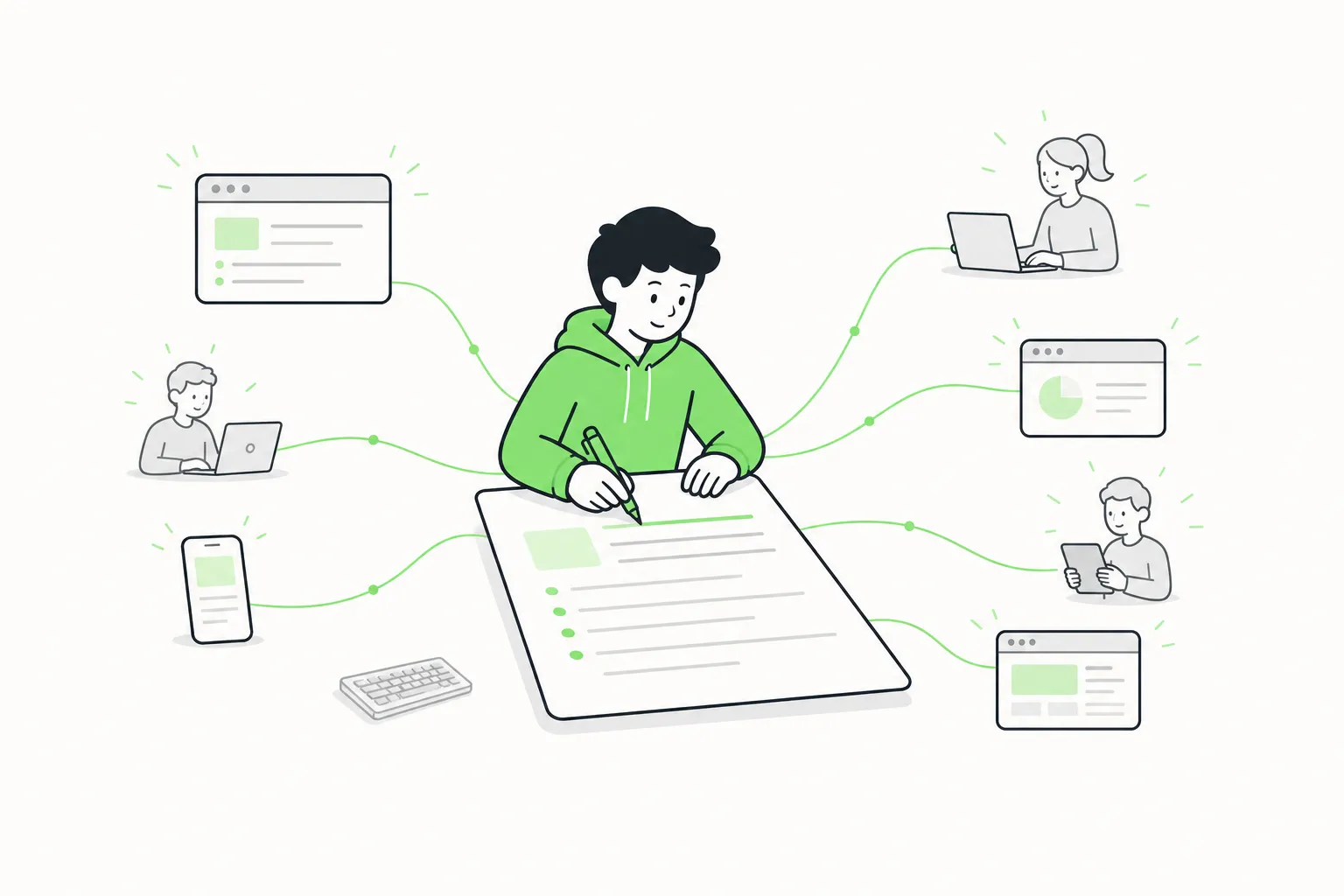
This sounds like a contradiction until you see it in practice. Seniors don’t spend all day producing code. They spend a growing share of their time writing: documentation, explanations for analysts, feature descriptions, comments that capture the business context behind a decision, clear PR descriptions.
Why? Because writing is how you scale your knowledge beyond your own keyboard. A pattern in your head helps one person. The same pattern written down clearly helps everyone who reads it — including the you of six months from now.
Take it further: write articles, document the new technology you just figured out, explain the thing nobody else on the team understands yet. The ability to make a hard technical idea simple in plain language is a genuine superpower — and it’s one of the clearest signals of seniority there is.
One last thing

You can do all of this and still not get promoted — because there’s no budget for it this quarter, or the timing is wrong, or a dozen other reasons outside your control.
Do it anyway. Not for a single review cycle, but because this is simply what good engineers do. Play the long game and the title becomes a formality. Success, eventually, is inevitable.